Describe the missing step
Is the thermostat screen blank, or does it show a call for heat? Is the furnace silent, or do you hear a fan or click before it stops? Is there air at the registers? These observations separate a completely unresponsive system from one that begins a heating cycle and fails later.
Thermostat settings, loss of electrical power and ignition faults can all leave a home without heat. None can be confirmed from the room temperature alone. If the fan runs but the air stays cool, the cold-air guide is a more precise starting point.
Read the controls without opening the furnace
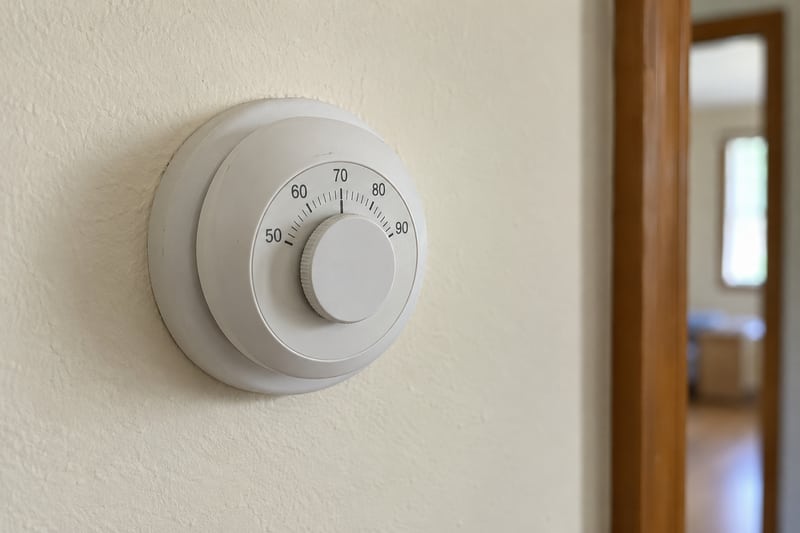
Check that the thermostat is in Heat mode and that its target is above the displayed room temperature. Review a schedule or hold setting if you know how to use the controls. For a battery-powered thermostat with a low-battery message, follow that thermostat's own instructions.
Look for an outage affecting other lights or appliances. A gas furnace still relies on electrical components. Check the utility named on your bill rather than assuming the city name identifies your electric supplier. City electric customers can consult Newark's outage map.
Do not remove the furnace door, join thermostat wires, adjust gas valves or bypass a switch to test a theory. If a breaker is tripped, report it; repeated trips need investigation, not repeated resets.
Keep a short record for the visit
Write down when you first noticed the loss of heat and when it last worked. Note whether the failure began after a power outage or a change to the thermostat. If a code can be seen through the furnace's closed viewing window, copy the complete pattern rather than guessing its meaning.
Have an existing model number or manual available if you can reach it safely. Do not climb, enter a confined space or move equipment to find a label. Explain the furnace location and any access restriction when arranging the assessment.
- Thermostat display and selected mode.
- Silence, clicks or a fan sound when heat is requested.
- Airflow present or absent at more than one register.
- A visible code and any recent interruption to power.
Ask what the diagnosis establishes
A no-start complaint is a starting point, not a parts list. Ask whether the finding concerns the thermostat signal, power to the equipment, an interrupted ignition sequence or a safety shutdown. The proposed work should follow the finding.
Confirm the diagnostic charge and whether it changes if you decline a repair. If the furnace cannot be used, ask for a clear explanation of the reason and the next safe step. Do not use an oven or outdoor combustion equipment to heat an occupied room.
Questions before you call
Does a working thermostat prove the furnace has power?
No. A lit display does not establish that every part of the furnace is receiving power or that a heat request reaches the equipment. Report what the display shows without treating it as a diagnosis.
Should a tenant arrange the repair?
Notify the property owner or manager and follow the building's maintenance process. Confirm who may authorize access, diagnosis and payment before arranging outside work.