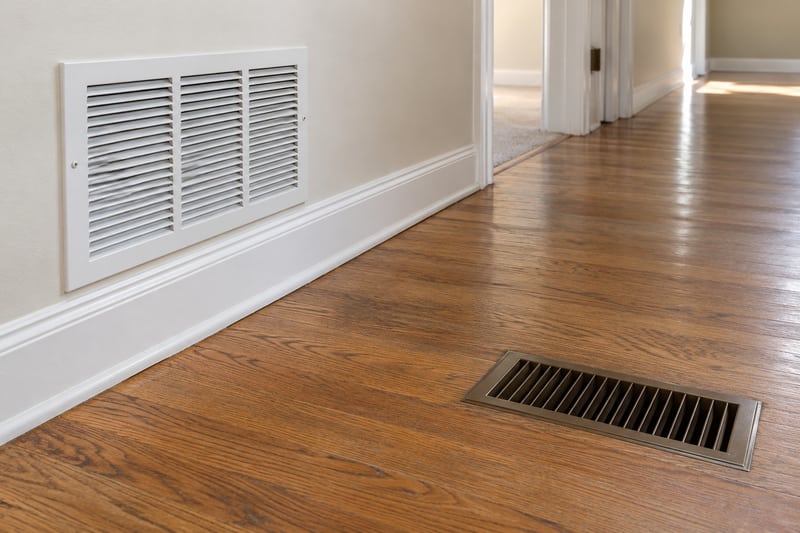
Separate weak air from missing heat
The blower moves air through the furnace and ductwork. A quiet register does not by itself prove that the motor has failed. Controls, airflow restrictions and other faults can affect whether air reaches a room.
Start by describing the pattern. Is every register weak, only one room affected, or is there no airflow anywhere? If air moves normally but stays cool, use the cold-air guide. If the system is silent throughout, begin with the no-heat questions.
Keep the room openings clear
Check visible supply registers and return grilles for furniture, curtains or rugs blocking them. Note any room that became harder to heat after furniture was moved. Use the manufacturer's instructions for a safely accessible filter; the correct size and type matter.
Avoid removing a blower panel or reaching into equipment. Do not touch a fan wheel, capacitor, wiring or motor, even if the equipment is quiet. Do not change motor speed settings to compensate for a comfort problem.
If you notice scorching, electrical odor or water near powered equipment, stay clear. Smoke or fire requires emergency action. Otherwise, stop heating at the thermostat if safe and seek an assessment instead of running the unit to reproduce the fault.
Describe sounds without chasing them
A hum, scrape, rattle or whistle is useful to report, but each is an observation rather than a diagnosis. Say whether it starts with the fan, lasts through the cycle or continues after the heat ends. Do not stand beside an open furnace to locate it.
A fan can continue after the burners stop as part of normal operation. A fan that never stops, or behaves differently from its usual pattern, raises a separate question about the controls. Tell us the thermostat's fan setting and the change you noticed.
- Rooms affected and whether any register still has normal airflow.
- The sound in your own words and when it begins.
- A recent filter change and the listed filter size, if known.
- Whether the fan stops, runs continuously or never starts.
Clarify what an airflow repair includes
Ask whether the finding is inside the furnace, at a control, or in the air path. Before approving a motor replacement, ask what showed the motor to be at fault and whether the quoted part matches the equipment.
Duct alterations, inaccessible runs and electrical supply work may fall outside a furnace component repair. Ask for those boundaries to be stated in the proposal. For a shared system or locked mechanical room, arrange access with the person responsible for the building before scheduling work.
Questions before you call
Does a humming furnace need a new motor?
A hum alone is not enough to choose a part. Keep clear of the equipment and describe when the sound occurs. The diagnosis should establish whether the motor, controls or another component is responsible.
Why is one bedroom cold while other rooms feel warm?
Start by noting the affected room and any visible blocked grille. A room-specific complaint needs a different airflow assessment from a blower that moves no air through the home.