Separate the fan from the heating cycle
The thermostat may have a fan setting marked On or Auto. On can circulate room-temperature air between heating cycles. Read the selected setting before concluding that the furnace has lost heat.
Air left in the ducts can feel cool at the beginning of a cycle. The important observation is what follows: does warmth arrive and the room begin to recover, or does the system keep moving cool air? Do not use a fixed number of minutes as proof that every furnace is behaving correctly.
If the equipment heats briefly and then stops while the fan continues, record that sequence. It is different from a fan that runs without any apparent heating from the start.
Check accessible airflow paths
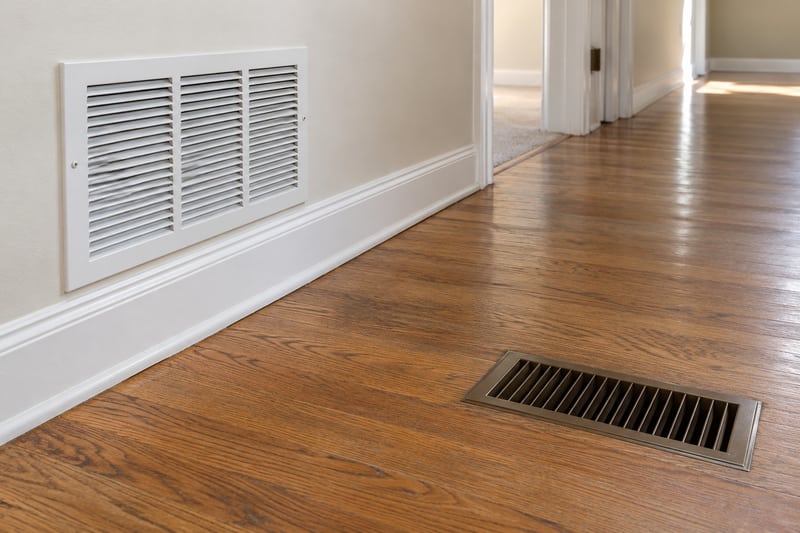
Look for furniture, rugs or curtains covering supply registers or return grilles. Keep those openings clear. If the filter is safely accessible without opening an equipment compartment, consult the furnace manual for the correct inspection and replacement method.
A restricted filter can interfere with airflow and contribute to a safety shutdown. A clean filter, however, does not rule out ignition, control or other equipment trouble. Do not run the furnace without its required filter as a test.
Leave burner parts, flame sensors, wiring and drain assemblies alone. If water is close to electrical equipment, keep clear of it. Do not dismantle a drain or vent because a general online guide lists it as a possible cause.
Make the pattern easy to explain
Compare more than one accessible register without putting anything into the duct. Is the complaint limited to one room, or is every room affected? Note whether the fan starts before any warmth, keeps running after warmth fades, or never stops.
Tell us if the equipment is actually a heat pump or an air handler paired with an outdoor unit. Different systems can produce different air temperatures. The equipment identity matters more than how warm the register feels to your hand.
- Fan setting shown on the thermostat.
- Cool air only at startup, between cycles or throughout operation.
- Whole-home trouble or a single room.
- Any visible fault code, new noise or change in airflow.
Resolve the cause before choosing a part
Ask what stopped heat production and what supports that finding. A blower that moves air does not settle whether the fault lies in ignition, controls or a protective shutdown. Request an explanation that connects the reported symptom to the proposed work.
For a quote, clarify whether diagnosis, parts and labor are included, and what requires a new approval. If the symptom returns after a repair, keep the original invoice and describe the same sequence again rather than assuming the same component has failed.
Questions before you call
Is cool air at startup always a fault?
Not by itself. Air already in the ducts can feel cool at first. Persistent cool airflow, falling room temperature or a repeated stop-start pattern needs a closer assessment.
Does fan movement mean the furnace is safe?
No. Moving air is not a combustion or electrical safety test. Treat gas odor, smoke or a carbon monoxide alarm as a separate safety issue and follow the emergency guidance before discussing repairs.